 Colorplan
Pale Oak vs Ammonite
Benjamin Moore Pale Oak OC-20 compared with Farrow & Ball Ammonite No.274
Pale Oak is a touch lighter (LRV 68 vs 63) than Ammonite. Both have a warm yellow undertone. They're close enough (ΔE 1.8) that most people won't see a difference on a wall, so one can usually stand in for the other.
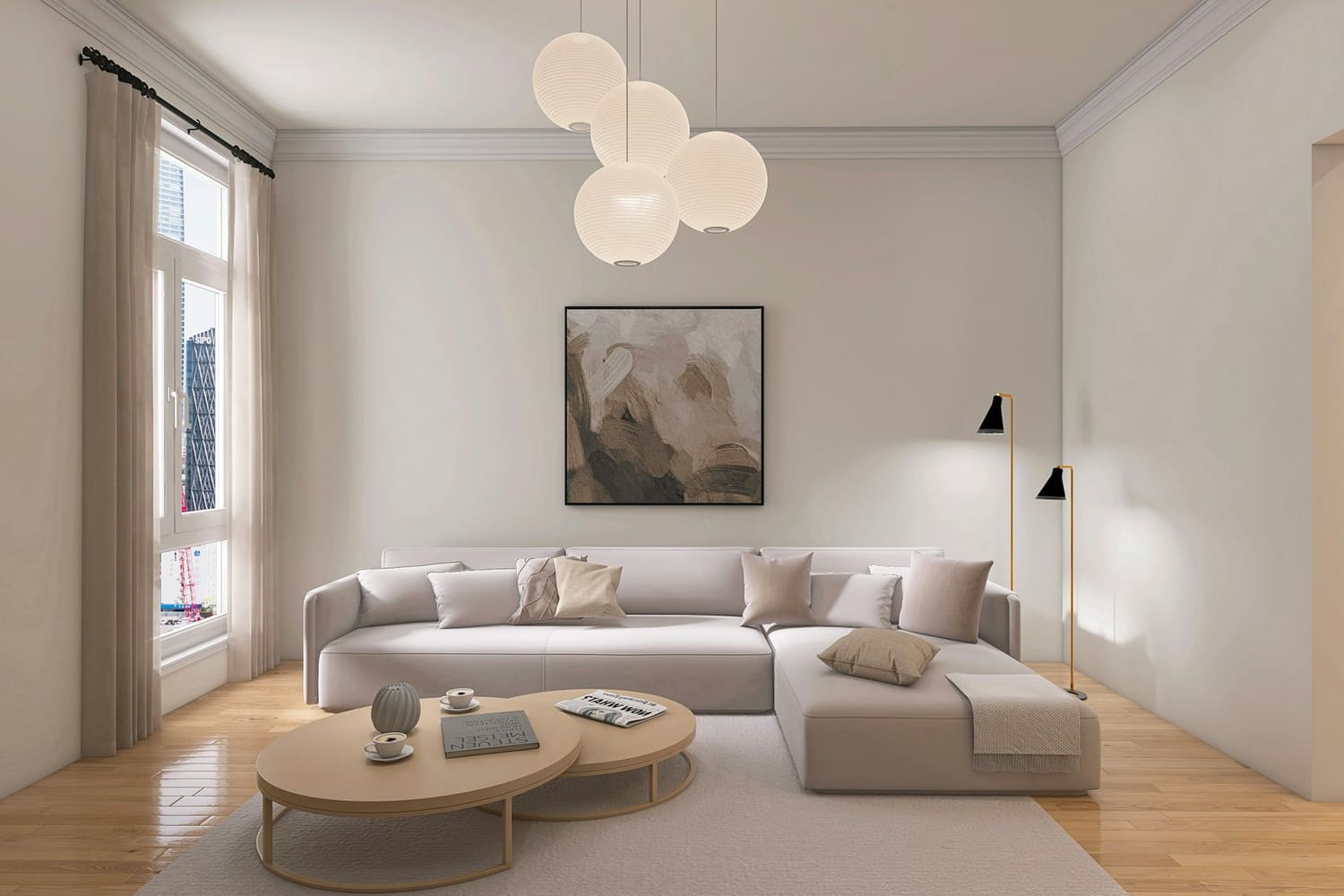
ΔE 1.8 · Very close
How different the two colors look. Under 2.5 is very hard to tell apart on a wall; over 5 is clearly different.
Which to choose
For a small or dim room, Pale Oak reflects more light (LRV 68).
Side by side
| Pale Oak | Ammonite | |
|---|---|---|
| Brand | Benjamin Moore | Farrow & Ball |
| Code | OC-20 | No.274 |
| LRV | 68 | 63 |
| Undertone | yellow | yellow |
| Family | Gray | Gray |
| HEX | #DDD6C9 | #D5CFC2 |
| Good for | open-plan living areas, hallways | open-plan living areas, hallways |
Questions
What is the difference between Pale Oak and Ammonite?
Pale Oak is a touch lighter (LRV 68 vs 63) than Ammonite. Both have a warm yellow undertone. They're close enough (ΔE 1.8) that most people won't see a difference on a wall, so one can usually stand in for the other.
Which is lighter, Pale Oak or Ammonite?
Pale Oak is lighter, with an LRV of 68 against 63.
How does Pale Oak compare to Ammonite in a north-facing room?
In north light Pale Oak will look a little cooler and grayer than on the chip. The same goes for Ammonite.
Based on published color values. Screens vary, so always check a physical sample before buying.