 Colorplan
Benjamin Moore Burgess Green (CW-485) is a mid-tone green with a warm yellow undertone and an LRV of 49. Closest matches: Sherwin-Williams Softened Green (SW 6177), Farrow & Ball Cooking Apple Green (No.32) and Behr Back to Nature (S340-4). For trim, try White Heron (OC-57).
Room Preview
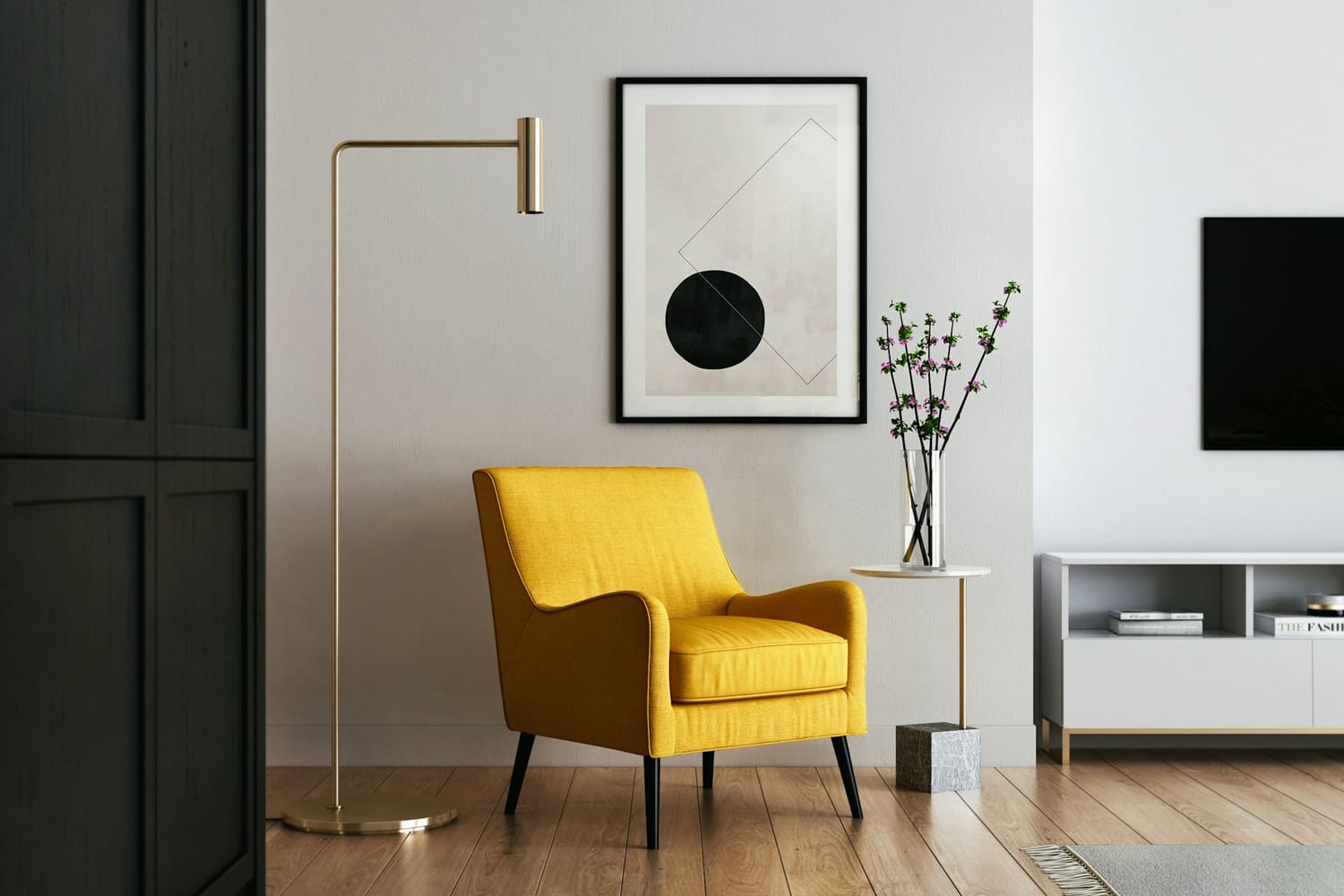
This photo shows walls only. Photos show the color in a real room's light; your own light will change it.
Suggested trim and ceiling are Benjamin Moore whites that share this color's undertone.
Color Details
| Family | Green |
| LRV | 49.1 (mid-tone; 0 = black, 100 = pure white) |
| HEX | #BABD99 |
| RGB | 186, 189, 153 |
| HSL | 65°, 21%, 67% |
About Burgess Green
Burgess Green (CW-485) is a mid-tone green from Benjamin Moore with a warm yellow undertone. With an LRV of 49, Burgess Green has visible color without darkening a room much.
In north-facing rooms the cool daylight tones down Burgess Green's warmth, so it can read a little grayer; south- and west-facing light brings the warmth forward. It's a good fit for bedrooms, offices, kitchen islands and cabinets and accent walls. Next to Spring Has Sprung (CSP-835), it's lighter.
How Burgess Green changes with the light
Burgess Green has a strong warm undertone that balances cool north light well. In strong south or west sun it can look more golden, so check a sample at midday and in the late afternoon.
North-facing rooms
Burgess Green's warmth balances the cool north light, which is why warmer colors are the safe pick for north rooms.
East-facing rooms
Burgess Green will look warmer and brighter in the morning and cooler and grayer by afternoon; check a sample at both times.
South-facing rooms
In strong south light Burgess Green can turn noticeably more yellow or orange; test a sample at midday.
West-facing rooms
Burgess Green will glow warmer in the late afternoon, so check it at sunset if you want to avoid a strong yellow cast.
See Burgess Green in real homes
Photos people have shared of Burgess Green in their own rooms. Opens Instagram or Pinterest in a new tab.
Burgess Green equivalents in other brands
The closest color from each brand. ΔE (“delta E”) scores how different two colors look: under 2.5 is very hard to tell apart on a wall, over 5 is clearly different.
Sherwin-Williams
Close · ΔE 5.0
Also close: Clary Sage (ΔE 6.1)
Compare side by side →Farrow & Ball
Very close · ΔE 2.3
Also close: Ball Green (ΔE 4.2)
Compare side by side →Similar Benjamin Moore colors
Burgess Green questions
What undertone does Burgess Green have?
Burgess Green has a warm yellow undertone, so it reads as a warm color. In north-facing rooms the cool daylight tones down Burgess Green's warmth, so it can read a little grayer; south- and west-facing light brings the warmth forward.
Is Burgess Green a light or dark color?
Burgess Green has a light reflectance value (LRV) of 49.1 on a scale where 0 is black and 100 is pure white, which makes it a mid-tone color. With an LRV of 49, Burgess Green has visible color without darkening a room much.
What is the closest match to Burgess Green in other paint brands?
Sherwin-Williams: Softened Green SW 6177 (close, ΔE 5.0); Farrow & Ball: Cooking Apple Green No.32 (very close, ΔE 2.3); Behr: Back to Nature S340-4 (close, ΔE 3.2). Matches are calculated with the CIEDE2000 color difference formula; always check a physical sample before buying.
What trim and ceiling color goes with Burgess Green?
Try White Heron (OC-57) on trim and Distant Gray (OC-68) on the ceiling. Both are Benjamin Moore whites that share Burgess Green's undertone.
Where does Burgess Green work best?
Burgess Green works well in bedrooms, offices, kitchen islands and cabinets and accent walls. With an LRV of 49, Burgess Green has visible color without darkening a room much.
Planning more than one room?
Build a whole-house palette and share it with your contractor. Free.